

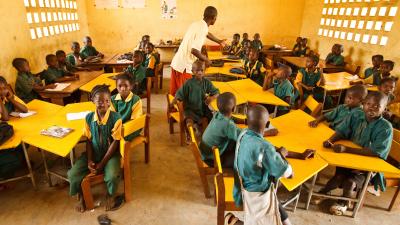


In early October, a School Furniture Design Workshop was held in UNICEF Supply Division in Copenhagen. Members of the Murphy Burnham & Buttrick team presented several design options and participants of the workshop, including education and procurement specialists based in Copenhagen, New York and Malawi, provided constructive feedback on the designs. At the end of the workshop, there was consensus and clear directions on the two preferred schemes to be further developed.
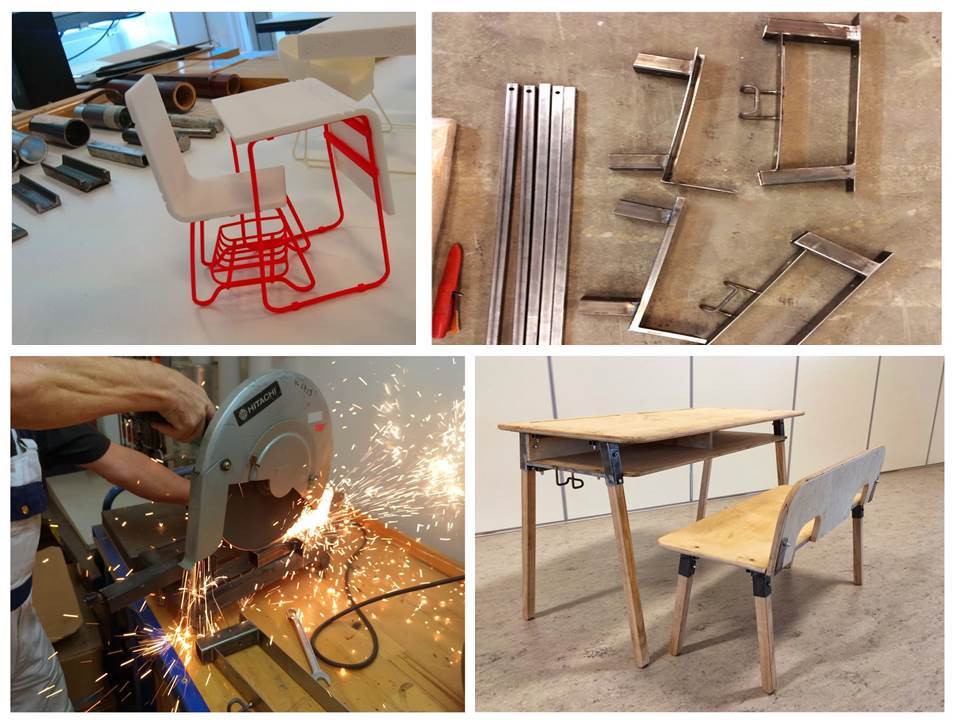
After a month of further design development, the two design schemes are now ready to be moved forward into production design stage. Prototypes are also being made to test the design and to learn from the production process before proceeding to production phase.
Updated December 2013
Collaboration with design company
UNICEF is collaborating with an external design company to create designs and specifications. Initial research has been conducted in Malawi and Rwanda with visits to local manufacturers and schools. Malawi has been identified as a pilot country, though there maybe others. Based on the end-user feedback, the furniture will undergo a possible re-design, followed by the development of procurement guidelines for local procurement by UNICEF country offices.
Updated August 2013
Learning Mission to Indonesia
In December 2012 staff members from UNICEF Supply Division conducted a mission in Banda Aceh, Indonesia with the goal of learning about school furniture and gather further information for the project.
As part of the post-tsunami rehabilitation programme in Indonesia, UNICEF provided temporary school tents, transitional schools, and rebuilt permanent schools to replace destroyed and heavily damaged school buildings within the Aceh region.
All transitional and permanent schools were entirely equipped with classroom furniture including: chairs, desks, blackboards, cupboards etc. It was a large scale procurement and logistic effort which took place between the years of 2005 and 2010.
The main purpose of this mission was to gather and record experiences, results and lessons learned under the post-tsunami furniture intervention. Now that the school furniture had been in continuous use for the past 2-3 years, it was a perfect opportunity for us to visit schools in urban and rural settings. We then were able to conduct a post-occupancy assessment of the quality and appropriateness of the furniture, by observing its flexibility and durability in use.
The complete travel report including classroom furniture evaluation can be found under Resources in the main menu.
Updated December 2012

