
Standardised school furniture specifications and design 
Child-friendly school furniture contributes to the comfort of students and facilitates learning. Unfortunately, school furniture in developing countries tends to be poorly designed both structurally and ergonomically, poorly suited for its intended purpose, and often uses materials of inappropriate quality and origin.
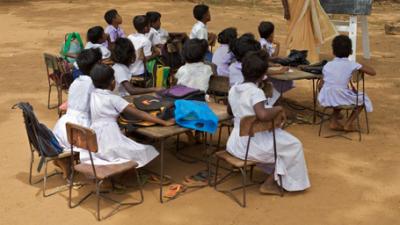
School furniture presents a particularly burdensome problem for many UNICEF country offices. Every year, UNICEF procures and supplies large quantities of school furniture, particularly in Africa and Asia, yet does not have generic child-friendly designs, generic specifications or a defined management process for local procurement and/or manufacturing. As a result, the school furniture procured by UNICEF in developing countries tends to be poorly designed.
The solution to this problem lies in developing child-friendly specifications, designs and production methodologies suited to local needs and conditions. In addition, an appropriate management approach in all aspects of the supply chain must be defined.
To solve this challenge, we need to develop innovative specifications and designs for strong, durable and child-friendly school furniture for developing countries. The designs will be simple to build, low in cost, and possible to construct by local industries, manufacturers or artisans.
Is it possible to create a specification or a design that is standardised for all geographic locations, and cultures?
