Overview
What are the user-needs?
The container must carry 10L of water, and be collapsible and stackable for easy packing and transportation. The container must also be easy to use – including pouring, filling, storing and carrying water. Rigidity, durability, life cycle cost and sustainability are also very important issues for consideration.
Overview of Innovation Project
- Who initiated the project?
The UNICEF Water, Sanitation and Hygiene community and the UNICEF Supply Division (SD) Water, Sanitation & Education Centre (WSEC).
- Why this innovation approach?
The project is a continuation of a previous project where UNICEF SD collaborated Kaos Pilots, Kolding Design School and Danish Technical University (DTU) to develop concepts for the water container challenge.
UNICEF SD’s WSEC team worked with Promens Packaging GmbH and the DTU team to develop the design for an impoved, fit-for-purpose solution, addressing the user needs. The new design will be field tested in direct comparison to existing water containers to determine which is preferred by the end user.
- What are the cultural considerations?
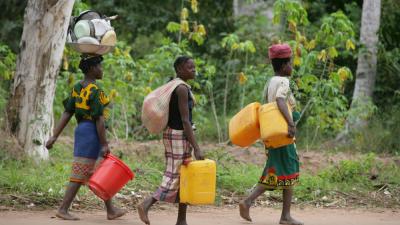
Different cultures have different means of carrying filled water containers (e.g. some carry them on their heads while others carry them on their backs). The field testing is taking this into account by testing in 4 different countries.
The water containers are currently being field tested in the following locations:
- CAR (Central African Republic)
- Haiti
- Sudan
- Afghanistan
There are no updates for this project yet.